
Early signs of dehydration you should never ignore
Fatigue, headaches, and dark urine are often the first signs your body is running low. Learn…
Thu Oct 29
Read article
 Back to blog
There is no single perfect number for everyone. Your body size, food, movement, climate, health, and even your schedule all shape how much fluid feels right on a given day.
That is why the most useful answer is a range plus a few body cues. This guide gives you a practical starting point, then shows you how to adjust it without turning hydration into a full-time project.
Common guidance suggests about 2.7 liters of total water per day for many adult women and 3.7 liters for many adult men. “Total water” includes drinks and moisture in food, so you do not need to pour that entire amount into a bottle.
Instead of chasing a universal target, notice what you already drink and how you feel. A typical baseline becomes much more useful when paired with thirst, energy, and urine color.
Activity and warmer weather usually increase fluid loss through sweat. High altitude, pregnancy, breastfeeding, fever, vomiting, and some medicines can also change your needs. If you have kidney or heart conditions, follow guidance from your care team.
Food matters too. Fruit, vegetables, yogurt, and soup all add fluid. You can explore our guide to what counts toward daily water intake for a fuller breakdown.
Thirst is useful, but it is not the only cue. A dry mouth, darker urine, headache, or a dip in concentration can prompt you to check in. These signs have many causes, so treat them as information rather than proof.
Pale straw is a reasonable everyday aim. Darker yellow can mean you need more fluid, while urine that stays completely clear may mean you are drinking beyond thirst. Vitamins and medicines can change color too.
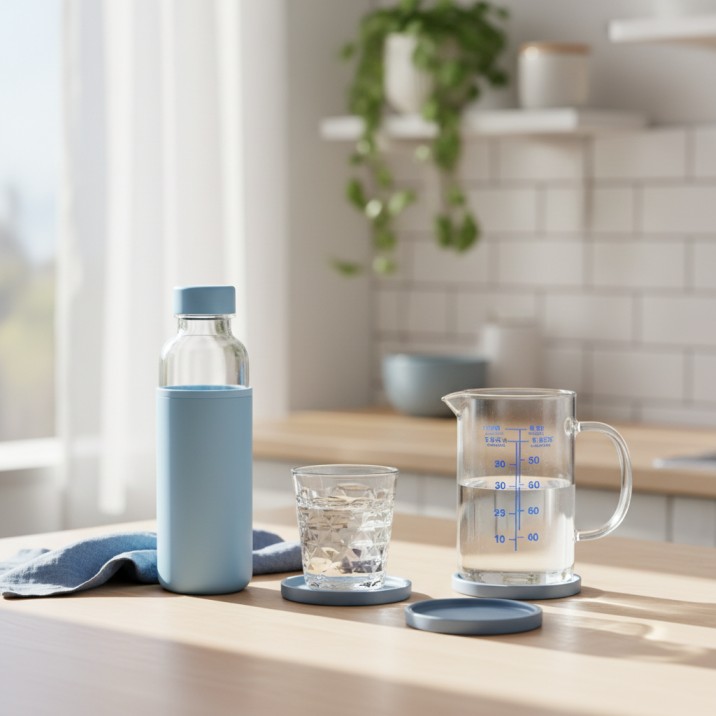
Consistency usually comes from a small system: a visible bottle, a few reliable moments, and reminders that respect your schedule. You do not need to drink on the hour or finish a huge bottle before lunch.
If your routine changes, your goal can change with it. A rest day, a long walk, and a hot commute are different hydration days. Flexible targets make that normal.
Fatigue, headaches, and dark urine are often the first signs your body is running low. Learn…

Water is the obvious choice, but milk, broth, and many fruits and vegetables also count. S…
Daily water needs vary by age, sex, weight, and activity level. Learn how to calculate your…